
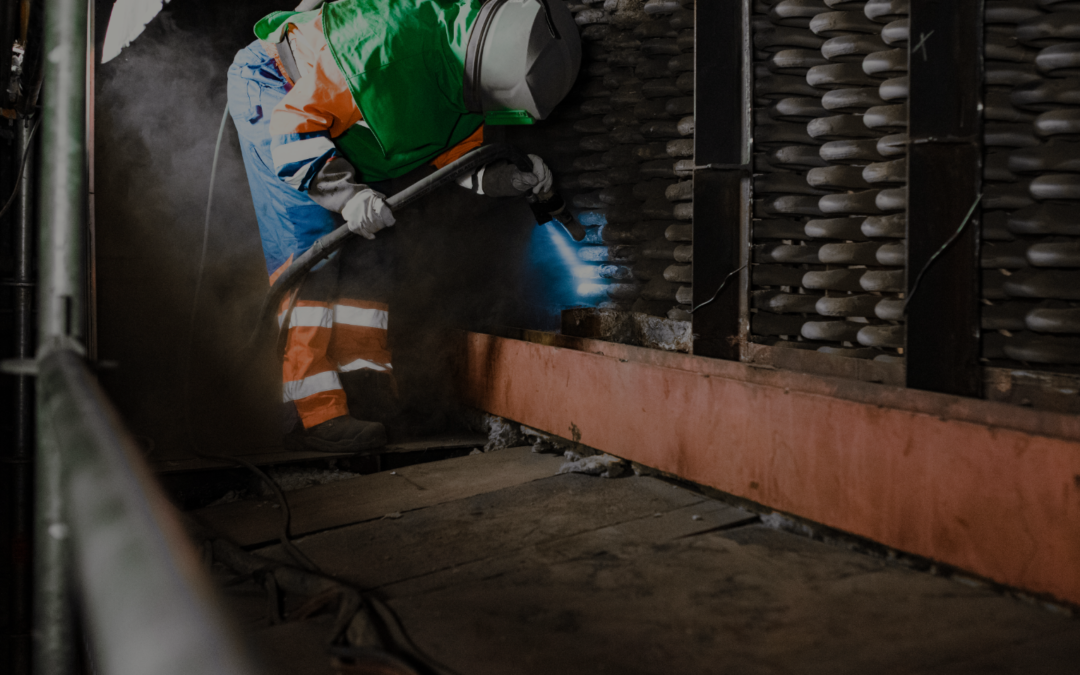
The best method for cleaning boiler tubes without surface damage is controlled dry-ice or specialist abrasive blasting that removes fouling deposits without abrading the underlying tube metal. Unlike traditional sandblasting or high-pressure water jetting, advanced blasting methods are engineered to clean heat transfer surfaces thoroughly while preserving tube wall integrity. This article unpacks the most common questions plant managers ask when evaluating boiler tube cleaning methods.
Which boiler tube cleaning methods cause the least surface damage?
The boiler tube cleaning methods that cause the least surface damage are those that match the abrasive force precisely to the hardness of the deposit rather than the hardness of the tube itself. Patented processes such as our Smart Blasting™ boiler tube cleaning method, along with carefully controlled chemical cleaning, consistently outperform conventional sandblasting and aggressive water jetting when surface preservation is the priority.
Traditional sandblasting removes fouling effectively but erodes tube walls over repeated cycles, gradually thinning metal and shortening service life. High-pressure water jetting can strip protective oxide layers and drive moisture into crevices. By contrast, methods designed specifically for heat exchanger surfaces use controlled media, pressure, and angle to lift deposits cleanly. The key differentiators worth evaluating are:
- Media hardness relative to tube material — softer media removes deposits without scoring the base metal
- Pressure control — precise nozzle pressure prevents mechanical stress on tube walls
- Access capability — effective methods must reach narrow tube spacings without relying on brute force
- Dust and residue management — dust-free processes reduce secondary contamination and allow faster post-cleaning inspection
When comparing methods, always ask whether the technique leaves the surface in an inspection-ready condition. If additional surface preparation is needed before NDT checks can be carried out, the method has already introduced extra downtime and cost.
What causes fouling on boiler heat transfer surfaces?
Fouling on boiler heat transfer surfaces is caused by the deposition of ash, slag, soot, and mineral compounds that accumulate as combustion gases pass over tube bundles. The specific composition of the deposits depends on the fuel type, combustion temperature, and flue gas velocity, but the underlying mechanism is consistent across most boiler types.
In biomass and waste-to-energy boilers, alkali compounds such as potassium and sodium chlorides are particularly aggressive. They condense on cooler tube surfaces and bind lighter fly ash particles into hard, adhesive layers. In coal-fired and CHP plant boilers, silicate and calcium-based slags are more common. Over time, even thin fouling layers create an insulating barrier that progressively reduces heat transfer efficiency.
Operating conditions accelerate fouling when combustion is incomplete, when fuel moisture content is high, or when flue gas temperatures drop below the dew point in certain zones. Boiler design also plays a role: tight tube spacings with low flue gas velocities create stagnant zones where particles settle more readily.
How does fouling affect boiler efficiency and energy costs?
Fouling reduces boiler efficiency by acting as a thermal insulator on heat transfer surfaces, forcing the boiler to consume more fuel to produce the same steam or heat output. Even a thin deposit layer of a few millimetres can measurably increase flue gas exit temperatures and push fuel consumption upward, directly inflating energy costs.
From an operational standpoint, the financial impact compounds quickly. Higher fuel burn raises direct operating costs. Elevated flue gas temperatures can stress downstream equipment such as economisers and air preheaters. In plants with emissions obligations, reduced combustion efficiency also risks pushing CO2 and particulate outputs above permitted thresholds.
For plant managers with P&L responsibility, fouling is not a maintenance nuisance; it is a measurable drag on margin. Research conducted by VTT confirms that restoring clean heat transfer surfaces immediately improves thermal performance, which means every planned outage is an opportunity to recover efficiency that has been silently eroding between shutdowns.
What is Smart Blasting and how does it protect boiler surfaces?
Smart Blasting™ is a patented boiler tube cleaning method developed specifically for fouled heat transfer surfaces. It removes deposits thoroughly and leaves a clean, inspection-ready surface without damaging the underlying tube metal. The process replaces conventional sand- and water-based cleaning methods that have historically caused surface wear over repeated maintenance cycles.
What makes Smart Blasting distinct is the combination of controlled media, optimised nozzle geometry, and dust-free operation. The method works effectively even in tight tube spacings where traditional equipment cannot reach without applying excessive force. Because the process is dust-free, the cleaned surface is ready for NDT inspection immediately after cleaning, eliminating the additional preparation steps that extend outage duration with other methods.
We developed Smart Blasting in response to a genuine gap in the market: plant operators needed a cleaning solution that delivered a superior result without the surface degradation that accumulates over years of aggressive blasting or jetting. With over 1,000 projects completed across eight countries, the method has been validated across a wide range of boiler types, including waste-to-energy, biomass, pulp and paper, and CHP plant applications.
When should boiler tubes be cleaned during planned maintenance?
Boiler tubes should be cleaned at every planned annual shutdown as a standard maintenance activity, not only when visible performance loss has already occurred. Scheduling cleaning during planned outages minimises production impact and allows fouling to be addressed before it causes measurable efficiency degradation or accelerates tube corrosion.
The timing within a shutdown matters too. Cleaning should be sequenced early in the outage so that the inspection-ready surfaces are available for NDT checks while the maintenance window is still open. This order of operations means that any tube condition findings can be acted on before the boiler is recommissioned, rather than requiring a follow-up shutdown.
Plants that defer cleaning until performance indicators force the issue typically face two compounding costs: the efficiency losses accumulated during the fouling period and the risk that harder, more bonded deposits require more intensive removal. Integrating boiler tube cleaning into the standard annual maintenance plan is the most cost-effective approach for most industrial boiler operators.
How do you verify boiler tube condition after cleaning?
Boiler tube condition after cleaning is verified using non-destructive testing (NDT) techniques that assess wall thickness, detect surface cracking, and identify corrosion without cutting or damaging the tubes. The most commonly used methods include ultrasonic thickness measurement, magnetic particle inspection, and visual examination of the cleaned surface.
The sequence matters: cleaning must come before inspection, because deposits obscure the tube surface and prevent accurate readings. A cleaning method that leaves the surface truly inspection-ready, free of residue and without surface scoring that could mask defects, makes NDT faster and more reliable.
We include NDT inspection services as part of our Stop n’ Go maintenance concept precisely because the two activities are interdependent. A clean surface that has not been mechanically damaged by the cleaning process gives inspectors the clearest possible baseline for assessing tube condition and predicting remaining service life. This integrated approach means plant managers receive both a cleaned boiler and a documented condition assessment from a single planned outage, reducing coordination overhead and keeping the maintenance schedule on track. Contact us to discuss your maintenance requirements.