
A fouled heat transfer surface reduces boiler efficiency because deposits act as an insulating layer between the combustion gases and the water or steam inside the tubes, forcing the boiler to burn more fuel to achieve the same heat output. Even a thin layer of ash, slag, or scale can cause measurable efficiency losses. The questions below unpack exactly how this happens, which systems are most at risk, and what plant operators can do about it.
How does fouling physically block heat transfer in a boiler?
Fouling reduces boiler efficiency by creating a layer of thermally resistant material on heat transfer surfaces. Combustion deposits, such as fly ash, slag, and mineral scale, have much lower thermal conductivity than clean steel. This forces heat to travel through an insulating barrier before it can reach the water or steam inside the tubes, reducing the rate of heat transfer significantly.
The thicker the deposit layer, the greater the resistance. In practical terms, this means the hot combustion gases pass through the boiler without transferring their full energy content. The flue gas exits at a higher temperature than it should, which is a direct indicator that heat is being wasted rather than converted into useful steam or hot water. Operators often notice rising flue gas outlet temperatures as one of the earliest signs that fouling is building up.
Fouling also disrupts gas flow patterns inside the boiler. When deposits accumulate unevenly, they narrow gas passages and create turbulence or dead zones, further reducing the contact between hot gases and heat transfer surfaces. This compounds the insulation effect and accelerates uneven wear on tube surfaces over time.
What happens to fuel consumption when boiler surfaces foul?
When boiler surfaces foul, fuel consumption increases because the boiler must compensate for reduced heat transfer by burning more fuel to maintain the required steam output or process temperature. The relationship is direct: the worse the fouling, the more fuel is needed to do the same job, which raises operating costs and reduces overall plant profitability.
This is one of the most financially significant consequences of heat transfer fouling for plant managers with budget responsibility. A boiler that once produced a given steam output at a certain fuel rate now requires noticeably more input to hit the same target. Over a full operating year, this excess fuel consumption accumulates into a substantial cost that dwarfs the investment required for regular cleaning.
The effect is gradual, which makes it easy to overlook. Fuel consumption creeps upward week by week rather than jumping overnight, so without consistent monitoring of boiler performance metrics, fouling can quietly erode profitability for months before it is identified as the root cause.
Why do fouled boilers produce more CO2 and harmful emissions?
Fouled boilers produce more CO2 and harmful emissions because burning additional fuel to compensate for poor heat transfer generates proportionally more combustion products. Every extra unit of fuel burned releases additional carbon dioxide, as well as other pollutants such as nitrogen oxides and particulate matter, making fouling a direct environmental and regulatory concern.
For plants with CO2 reduction targets or emissions compliance obligations, this is not a minor operational issue. It is a strategic risk. A boiler running with significant heat transfer fouling may push a facility above permitted emission thresholds, triggering regulatory scrutiny or financial penalties. It also works directly against sustainability commitments that many industrial operators are now required to report on publicly.
Maintaining clean heat transfer surfaces is therefore not just a maintenance decision. It is an environmental one. Regular, effective cleaning keeps combustion efficient, keeps fuel use at its minimum, and keeps emissions within the range that responsible and compliant plant operation demands.
Which boiler types are most vulnerable to heat transfer fouling?
Boilers that burn solid or heterogeneous fuels are most vulnerable to heat transfer fouling. Waste-to-energy boilers, biomass boilers, and recovery boilers in pulp and paper mills are particularly susceptible because their fuels contain high levels of ash, alkali compounds, and other contaminants that deposit readily on tube surfaces at combustion temperatures.
Waste-to-energy and municipal solid waste boilers deal with highly variable fuel compositions, which produce unpredictable deposit chemistry. Biomass boilers burning agricultural residues or mixed wood fuels face alkali-rich ash that is prone to forming sticky, hard-to-remove deposits. Recovery boilers in pulp mills manage smelt and chemical compounds that create their own demanding fouling challenges.
Combined heat and power plants and sawmill energy boilers also experience significant fouling, particularly when fuel quality varies seasonally or when load profiles change frequently. In all these cases, the common factor is a fuel stream that introduces contaminants into the combustion zone, where they inevitably find their way onto heat transfer surfaces.
How quickly does fouling reduce boiler efficiency after cleaning?
Fouling begins to reduce boiler efficiency almost immediately after cleaning, but the rate of efficiency loss depends on fuel type, boiler design, and operating conditions. In high-fouling environments such as waste-to-energy or biomass plants, measurable deposit buildup can occur within days or weeks. In less demanding applications, the degradation may take months to become operationally significant.
This is why a single annual clean is rarely sufficient for high-intensity operations. Fouling is a continuous process driven by combustion chemistry, and the deposits that reduce heat transfer do not wait for a scheduled maintenance window to accumulate. Plants that monitor flue gas temperatures and boiler performance indicators in real time are better positioned to detect fouling early and act before efficiency losses become severe.
Understanding the fouling rate specific to a plant’s fuel and operating profile is essential for planning an effective maintenance schedule. Some facilities benefit from cleaning during planned production stops, while others may need more frequent interventions to protect efficiency and meet output targets year-round.
What is the most effective method for cleaning fouled heat transfer surfaces?
The most effective method for cleaning fouled heat transfer surfaces is one that removes deposits completely without damaging the tube surface, works efficiently in confined spaces between tubes, and leaves the surface ready for inspection immediately after treatment. Traditional methods such as sandblasting and high-pressure water washing have significant limitations in meeting all three of these criteria simultaneously.
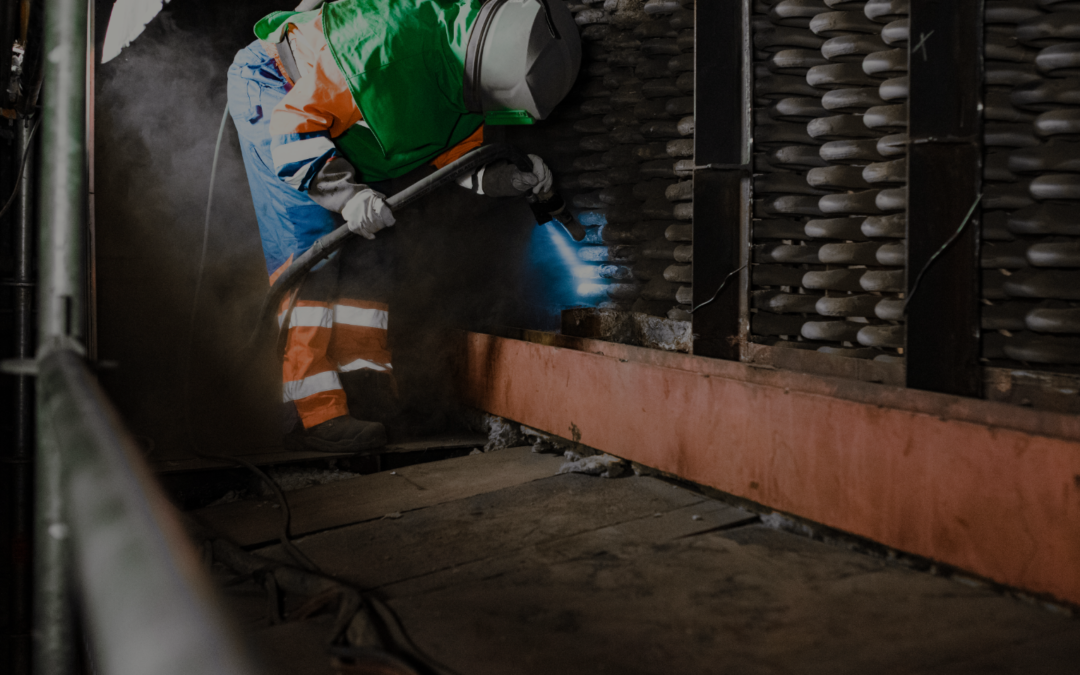
Our patented Smart Blasting boiler cleaning method was developed specifically to address the shortcomings of conventional boiler cleaning techniques. Unlike sand- or water-based approaches, Smart Blasting removes deposits without damaging tube surfaces, operates effectively even in tight tube spacing, and produces a dust-free, inspection-ready finish. The method has been validated by VTT Technical Research Centre of Finland to improve heat transfer immediately after cleaning and to restore flue gas flow characteristics.
Choosing the right cleaning method matters beyond just the quality of the result. A cleaning approach that damages tube surfaces creates long-term integrity risks, while one that leaves residual deposits fails to restore full thermal performance. For plant managers evaluating the return on investment from boiler maintenance, the quality and durability of the clean are as important as the cost of the service itself. We have completed over 1,000 Smart Blasting projects across eight countries, working with paper mills, pulp plants, waste-to-energy facilities, and CHP operators who need reliable, measurable results from every maintenance intervention. Contact us to discuss your boiler maintenance needs and find out how we can help restore and protect your plant’s heat transfer performance.