
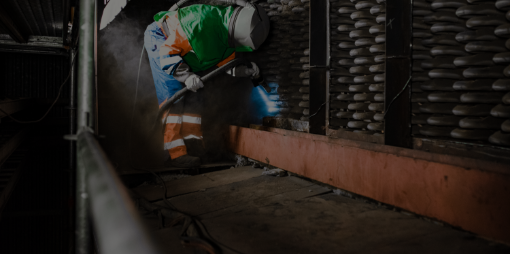
Smart Blasting can be used on the vast majority of industrial boiler systems, including recovery boilers, biomass boilers, waste-to-energy boilers, and combined heat and power (CHP) units. The method is specifically designed to clean fouled heat transfer surfaces without damaging tube walls, making it suitable for a wide range of boiler configurations. Below, we answer the most common questions plant managers ask before scheduling their first Smart Blasting project.
Which boiler types are compatible with Smart Blasting?
Smart Blasting is compatible with most industrial boiler types used in energy production and process industries. This includes recovery boilers in pulp and paper mills, biomass-fired boilers in sawmills and CHP plants, waste-to-energy boilers in incineration facilities, and conventional steam boilers. The method has been successfully applied across all of these configurations in over 1,000 projects spanning eight countries.
The reason for this broad compatibility comes down to how Smart Blasting works as a cleaning method. Rather than relying on abrasive media like sand or high-pressure water, it uses a patented cleaning mechanism that removes deposits from heat transfer surfaces without eroding or damaging the tube material itself. This matters enormously for plant managers who need a cleaning method they can trust for high-value boiler components.
Industries that regularly use Smart Blasting include:
- Pulp and paper mills with recovery and power boilers
- Waste incineration and waste-to-energy facilities
- Sawmills and biomass energy plants
- CHP (combined heat and power) plants
- Other industrial energy production facilities
How does Smart Blasting adapt to different boiler configurations?
Smart Blasting adapts to different boiler configurations through its ability to operate effectively in confined spaces and varied tube geometries. The method works in tight tube gaps where conventional cleaning tools simply cannot reach, and it is carried out by trained specialists who adjust the technique to suit each boiler’s specific layout and fouling pattern.
This adaptability is one of the core advantages that sets Smart Blasting apart from older approaches. Traditional boiler cleaning methods often struggle with dense tube banks, irregular spacing, or areas with heavy deposit build-up. Smart Blasting handles these challenges without requiring modifications to the boiler structure or extended access preparation.
Our teams are trained in-house specifically for this method, which means every project benefits from consistent technique and quality regardless of the boiler type or facility. That consistency translates directly into a predictable, inspection-ready result after every clean, something plant managers with tight maintenance windows genuinely value.
Are there boiler systems where Smart Blasting cannot be used?
Smart Blasting is not suitable for boiler systems where tube surfaces are already structurally compromised, corroded through, or where existing damage would be worsened by any form of cleaning intervention. In these cases, a thorough NDT (non-destructive testing) inspection should take place first to assess the condition of heat transfer surfaces before any cleaning work begins.
It is also worth noting that Smart Blasting is designed for cleaning heat transfer surfaces rather than internal tube cleaning or waterside deposits. If a plant’s primary challenge is internal scaling or waterside fouling, a different maintenance approach would be more appropriate.
The practical guidance here is straightforward: if you are unsure whether your boiler is a suitable candidate, an assessment before the annual maintenance window is the right first step. We offer NDT inspection services as part of our broader Stop n’ Go maintenance concept, which helps identify the condition of surfaces before any cleaning work is planned.
What results can different boiler types expect from Smart Blasting?
Regardless of boiler type, the primary result of Smart Blasting is the restoration of heat transfer efficiency. When deposit layers are removed from heat transfer surfaces, the boiler can exchange heat at its designed capacity again, which reduces fuel consumption, lowers flue gas temperatures, and improves overall combustion performance. These gains are measurable immediately after cleaning.
Research conducted by VTT (the Finnish Technical Research Centre) has confirmed that Smart Blasting improves heat transfer in boilers and enhances flue gas flow. For plant managers tracking energy costs and CO2 emissions, this is not a minor operational detail. Even a modest improvement in heat transfer efficiency across a large industrial boiler translates into meaningful fuel savings over a full operating year.
Different boiler types tend to see results in slightly different areas:
- Recovery boilers: Improved heat recovery and reduced risk of deposits affecting draft systems
- Waste-to-energy boilers: More consistent combustion performance and reduced fouling-related downtime
- Biomass boilers: Restored steam output and improved fuel efficiency
- CHP plants: Better overall plant efficiency and more predictable maintenance intervals
How does Smart Blasting compare to traditional boiler cleaning methods?
Smart Blasting outperforms traditional boiler cleaning methods in four key areas: cleaning quality, speed, surface safety, and dust generation. Sand blasting and high-pressure water washing, the two most common conventional approaches, both carry a real risk of damaging tube surfaces and often leave residues or moisture that delay inspection readiness. Smart Blasting delivers an inspection-ready surface without those drawbacks.
Speed is a particularly important factor for plant managers who are working against tight annual maintenance schedules. Smart Blasting is significantly faster than water-based cleaning methods, which require drying time before any NDT inspection or follow-up work can take place. With Smart Blasting, the cleaned surface is ready for inspection immediately.
The dust-free nature of the process is another practical advantage. Conventional abrasive blasting generates significant dust and waste, which adds both clean-up time and disposal costs to a maintenance project. Smart Blasting eliminates this problem, keeping the work environment cleaner and reducing the overall waste footprint of the maintenance shutdown.
When should a plant schedule Smart Blasting for their boiler?
Smart Blasting should be scheduled as part of a planned annual maintenance shutdown, ideally integrated into the broader yearly service window. This timing allows the cleaning work to be carried out without adding unplanned production downtime, and it ensures the boiler enters the next operating period with fully restored heat transfer performance.
The most common signal that Smart Blasting is overdue is a gradual decline in boiler efficiency. If fuel consumption is creeping upward, flue gas temperatures are rising, or steam output is falling short of design capacity, deposit build-up on heat transfer surfaces is often the cause. Addressing this during the next planned shutdown prevents those losses from compounding over multiple operating months.
For plants with no previous baseline, in 2026 it is worth conducting an initial inspection to assess current deposit levels and establish a cleaning frequency that fits the specific fuel type and operating conditions of the boiler. Some boilers require annual Smart Blasting; others, depending on fuel quality and operating hours, may need attention more frequently. Our project managers work with plant teams to develop a maintenance schedule that fits both the technical requirements and the operational calendar.