
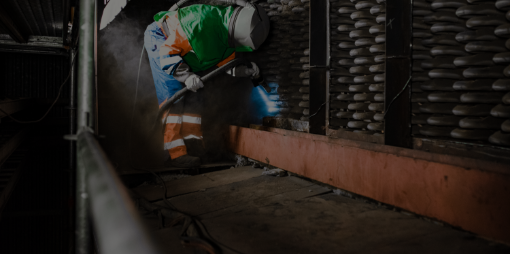
Smart Blasting is considered safer than conventional boiler cleaning methods because it uses a controlled, dry blasting process that eliminates the risks associated with high-pressure water jets and abrasive sand blasting, protecting both workers and equipment. The method is purpose-built for heat transfer surface cleaning in energy production environments, where the combination of confined spaces, fragile tubing, and hazardous residues creates serious safety challenges. The sections below unpack exactly where conventional methods fall short and how Smart Blasting addresses each risk.
What makes conventional boiler cleaning methods hazardous?
Conventional boiler cleaning methods, primarily high-pressure water washing and sand blasting, introduce multiple overlapping hazards that affect workers, equipment, and the surrounding environment. High-pressure water jets can cause severe injury if misdirected, while sand blasting generates silica dust that poses long-term respiratory risks for anyone working nearby. These methods also produce large volumes of contaminated waste that require careful handling and disposal.
Beyond the direct physical dangers, conventional methods create secondary hazards that are easy to underestimate. High-pressure washing saturates insulation materials and surrounding structures, increasing the risk of slips, falls, and electrical incidents in already confined working conditions. Sand blasting, meanwhile, reduces visibility inside the boiler to near zero during operation, making it difficult for workers to monitor their surroundings or respond quickly to unexpected situations.
There is also the question of surface damage. Aggressive abrasive techniques erode tube walls over time, creating micro-cracks and thinning that may not be immediately visible but that weaken structural integrity. A boiler with compromised heat transfer surfaces is not only less efficient, it is also a long-term safety liability that increases the risk of unexpected failures during production.
How does Smart Blasting protect heat transfer surfaces during cleaning?
Smart Blasting for heat transfer surfaces protects heat transfer surfaces by using a precisely calibrated blasting medium and controlled application technique that removes fouling deposits without abrading or eroding the underlying tube material. Unlike sand blasting, which relies on hard, sharp particles that cut into surfaces, the Smart Blasting method is engineered to break away deposits while leaving the tube wall intact and undamaged.
This distinction matters significantly for plant safety and longevity. Tube wall thinning caused by aggressive cleaning accumulates over years of maintenance cycles. Each round of overly abrasive cleaning brings surfaces closer to failure thresholds, increasing the likelihood of leaks, unplanned shutdowns, and potentially dangerous pressure events. By preserving surface integrity, Smart Blasting extends the reliable service life of boiler components.
The method also delivers what we describe as an inspection-ready cleaning result, meaning that after cleaning, surfaces are in a condition where NDT (non-destructive testing) inspections can be carried out immediately and accurately. When surfaces are pitted or roughened by abrasive methods, inspection readings become less reliable, which means defects can go undetected. Clean, undamaged surfaces support better inspection outcomes, which is itself a critical safety factor in industrial boiler maintenance.
What are the occupational safety advantages of Smart Blasting?
The occupational safety advantages of Smart Blasting over conventional boiler cleaning methods include significantly reduced dust exposure, elimination of high-pressure water hazards, and a cleaner working environment that lowers the risk of slips, falls, and respiratory incidents. These benefits are especially important in the confined, poorly ventilated spaces where boiler cleaning typically takes place.
Dust generation is one of the most serious occupational health concerns in industrial cleaning. Silica dust from sand blasting is a known cause of silicosis, a progressive and irreversible lung disease. Smart Blasting operates as a low-dust process, which dramatically reduces airborne particulate levels and protects workers from long-term respiratory harm without requiring the same level of respiratory protective equipment that sand blasting demands.
The absence of high-pressure water also removes a significant category of injury risk. Water jet incidents can cause deep tissue injuries that are not always immediately apparent, and wet surfaces in boiler interiors create slip and fall hazards that are difficult to control. A dry process keeps the working environment more stable and predictable, allowing teams to move and work more safely throughout the cleaning operation.
We train all our Smart Blasting professionals in-house to ensure that safety standards are applied consistently on every project, regardless of site conditions or country. This structured approach to workforce training is part of why we hold ISO 45001 certification for occupational health and safety management.
Does Smart Blasting reduce environmental safety risks compared to other methods?
Yes, Smart Blasting reduces environmental safety risks compared to conventional cleaning methods by generating less contaminated waste, eliminating wastewater runoff, and producing a cleaner, more manageable waste stream that is easier to handle and dispose of responsibly. This makes it a meaningfully safer option from both a site safety and regulatory compliance perspective.
High-pressure water washing creates large quantities of contaminated wastewater mixed with ash, heavy metals, and combustion byproducts from the boiler interior. Managing and disposing of this wastewater requires containment systems, specialist handling, and compliance with environmental regulations. If containment fails, contaminated water can reach drainage systems or soil, creating environmental liability for the plant.
Smart Blasting produces dry waste that is far easier to collect, contain, and process. We operate within a circular economy framework, and responsible waste management is built into our service delivery. This aligns with the environmental management principles we maintain under our ISO 14001 certification, and it supports plants that are working toward their own environmental and CO2 reduction targets.
When should a plant consider switching from conventional cleaning to Smart Blasting?
A plant should consider switching from conventional boiler cleaning to Smart Blasting when it is experiencing recurring surface damage from cleaning, rising energy costs from reduced heat transfer efficiency, increasing waste disposal complexity, or occupational health concerns related to dust and high-pressure water use. Any one of these signals is a strong indicator that the current approach is creating more risk than necessary.
Plants that run frequent annual shutdowns are particularly good candidates for the switch. Each cleaning cycle with abrasive or high-pressure methods compounds cumulative surface damage, and over a five to ten year horizon, the cost of that damage in repairs, unplanned downtime, and reduced boiler lifespan can significantly outweigh any short-term savings from cheaper cleaning methods.
From a strategic standpoint, 2026 brings continued pressure on energy-intensive industries to demonstrate measurable progress on efficiency and emissions. A safe boiler cleaning method that also demonstrably improves heat transfer performance, as independently verified by VTT research, offers plant managers a solution that addresses operational, financial, and environmental goals simultaneously. That combination of benefits is what makes Smart Blasting worth evaluating not just as a cleaning upgrade, but as a long-term maintenance strategy. Contact us to discuss your plant and find out how Smart Blasting can be applied to your specific maintenance needs.